The Off-Season Shuffle: Analyzing the NHL’s Executive and Personnel Shifts
As the NHL postseason winnows the field, the silence of teams eliminated from contention has been replaced by the frantic activity of front offices preparing for the summer. This week’s personnel moves provide a clear window into how organizations are navigating the transition from rebuild to contention, or simply trying to stave off irrelevance. From the New Jersey Devils’ calculated pivot to analytics-heavy leadership to the Vancouver Canucks’ admission of a failed trajectory, the league’s power structure is currently in flux.
The most intriguing organizational maneuver is the New Jersey Devils’ decision to appoint Sunny Mehta as general manager. Mehta’s return to the franchise—where he previously served as Director of Analytics—signals a doubling down on a data-driven philosophy. Taking over from Tom Fitzgerald, Mehta inherits a roster that fundamentally failed to meet high expectations this season. His challenge is immediate: with the core largely locked into long-term deals, Mehta’s primary levers for change reside in the trade market and free agency rather than internal development. The appointment of a former assistant general manager from the Florida Panthers suggests that New Jersey is looking for the kind of systematic, efficiency-based growth that has defined the Panthers’ rise.
Contrast this with the situation in Vancouver, where the firing of Patrik Allvin serves as a grim marker of a team that has fallen from grace. After securing a Pacific Division title in 2023-24, the franchise has suffered a catastrophic regression, culminating in a last-place finish this year. The departure of Quinn Hughes—a move necessitated by his refusal to re-sign—highlights a breakdown in the team’s long-term retention strategy. With rumors swirling around internal candidate Ryan Johnson and external replacements, the Canucks are entering a period of institutional instability that typically precedes a massive, structural overhaul.
The Changing of the Guard on the Bench and in the Net
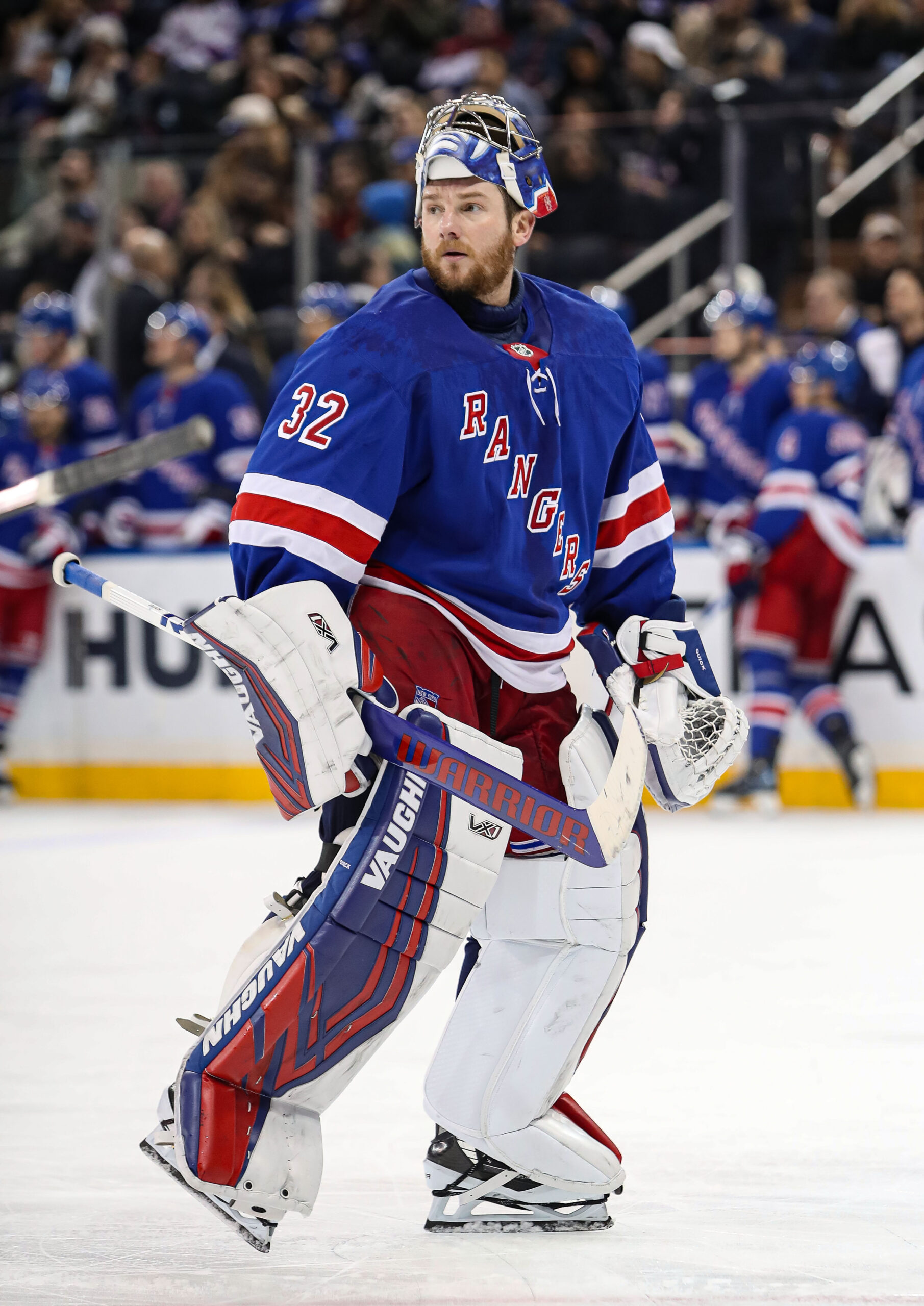
The league is simultaneously seeing a shift in its veteran guard. The announcement of Jonathan Quick’s impending retirement closes the book on a 19-year career defined by a 16-year tenure in Los Angeles and two Stanley Cup championships. Quick’s statistical profile—410 regular-season wins and a .921 postseason save percentage—remains the standard for a specific era of goaltending. His departure, following a three-year stint with the Rangers, marks the final transition for one of the most decorated netminders of the salary cap era.
While some veterans exit, others are being entrusted with long-term stability. The Chicago Blackhawks have extended GM Kyle Davidson, banking on the momentum of a multi-year rebuild. Davidson’s tenure has been defined by a methodical acquisition of prospects, and the team’s upcoming draft capital remains the cornerstone of that strategy. Similarly, the Columbus Blue Jackets have opted for continuity, granting head coach Rick Bowness a one-year extension. Despite a finish that kept the team outside of the playoff picture, Bowness’s 21-11-5 record in a brief three-month stint clearly convinced ownership that he has the leverage to enforce the cultural changes he publicly demanded at the close of the season.
Mid-Tier Contracts and Depth Management
While the headlines focus on front-office upheaval, the current week also offered a look at how teams are managing their bottom-six and third-pairing value. The Dallas Stars and Winnipeg Jets both completed extensions that prioritize cap efficiency over flash.
The Stars’ two-year, $3.5MM extension for defenseman Nils Lundkvist locks in a third-pairing blueliner at a manageable $1.75MM AAV. Lundkvist saw a career-high 16:29 of average ice time this season, proving he is a reliable, if unspectacular, component of the defensive corps. Winnipeg’s extension for Cole Koepke follows a similar logic. By committing two years and $2.9MM to the forward, the Jets are retaining a player who led the team with 186 hits while providing secondary scoring depth.
These moves reflect a league-wide focus on fiscal discipline in an era where teams can ill-afford bloated contracts for depth players. The challenge for teams like the Devils and Canucks, who are undergoing significant changes in leadership, will be to emulate this disciplined approach to roster construction while simultaneously navigating the high-stakes decisions required to return to the postseason.
As the playoff bracket narrows, the true indicator of success for these franchises won't be found in the current week's news cycle. Instead, observe the off-ice recruitment strategies as teams without postseason life attempt to bridge the talent gap before the next training camp. The structural rebuilds in Chicago and the analytical pivots in New Jersey represent the two competing schools of thought on how to escape the league’s bottom half; only one will prove viable in the next 18 months.
Photo courtesy of Danny Wild-Imagn Images.