The departure of Patrik Allvin from the Vancouver Canucks general manager post, effective this past Friday, marks the end of a four-and-a-half-season tenure defined by a failure to reconcile heavy financial commitments with on-ice production. While the firing serves as the immediate catalyst for organizational change, the broader narrative concerns a front office acknowledging that the current core has hit its ceiling. For industry observers, the focus is less on Allvin’s exit and more on the explicit, almost brutal, roadmap for roster dissolution outlined by President of Hockey Operations Jim Rutherford.
Rutherford’s public posture during the announcement—which explicitly signaled an intent to cede total control over hockey operations to his successor—functions as an aggressive recruitment tactic. By promising autonomy, the organization is effectively admitting that the previous power structure was insufficient to navigate the team’s self-inflicted roster bloat. The candidate taking the seat inherits a difficult mandate: the systematic dismantling of a high-priced, underperforming group.
The strategic failure in Vancouver is best contextualized by the failed retention gambit involving Quinn Hughes. Rutherford confirmed that previous extensions for Thatcher Demko and Brock Boeser were framed as measures to secure Hughes’ long-term commitment. That gamble backfired, resulting in the eventual trade of their marquee defenseman to the Minnesota Wild. The precedent is now set: if the team’s anchor piece could be moved, no veteran is shielded from the upcoming housecleaning. The previous trade of Conor Garland to the Columbus Blue Jackets—despite his recent six-year, $36-million deal—serves as the template for what lies ahead.
The most significant hurdle for the incoming front office is the contract of Elias Pettersson. Producing a marginal 51 points in 74 games last season, Pettersson represents a complex asset—or liability—with six years remaining at an AAV of $11.6 million. Pettersson has another six seasons at $ 11.6 million per season, creating a scenario where the Canucks will likely be forced to retain salary to facilitate a move, potentially netting little more than cap flexibility in return. This is the hallmark of a distressed asset sale.
 Jim Rutherford's Future With The Canucks Looks Murky Based On Recent Comments
Jim Rutherford has one more year remaining on his contract with the Vancouver Canucks
Jim Rutherford's Future With The Canucks Looks Murky Based On Recent Comments
Jim Rutherford has one more year remaining on his contract with the Vancouver Canucks
While the market for Pettersson is complicated, pieces like Demko and Boeser occupy a different category. Despite holding full no-movement clauses, their utility to league-wide contenders ensures a path to resolution. Goaltending scarcity alone guarantees a market for Demko, while Boeser’s past 40-goal ceiling remains a selling point. The challenge for the new GM will not be interest, but the creative maneuvering required to bypass contractual leverage to execute the necessary trades.
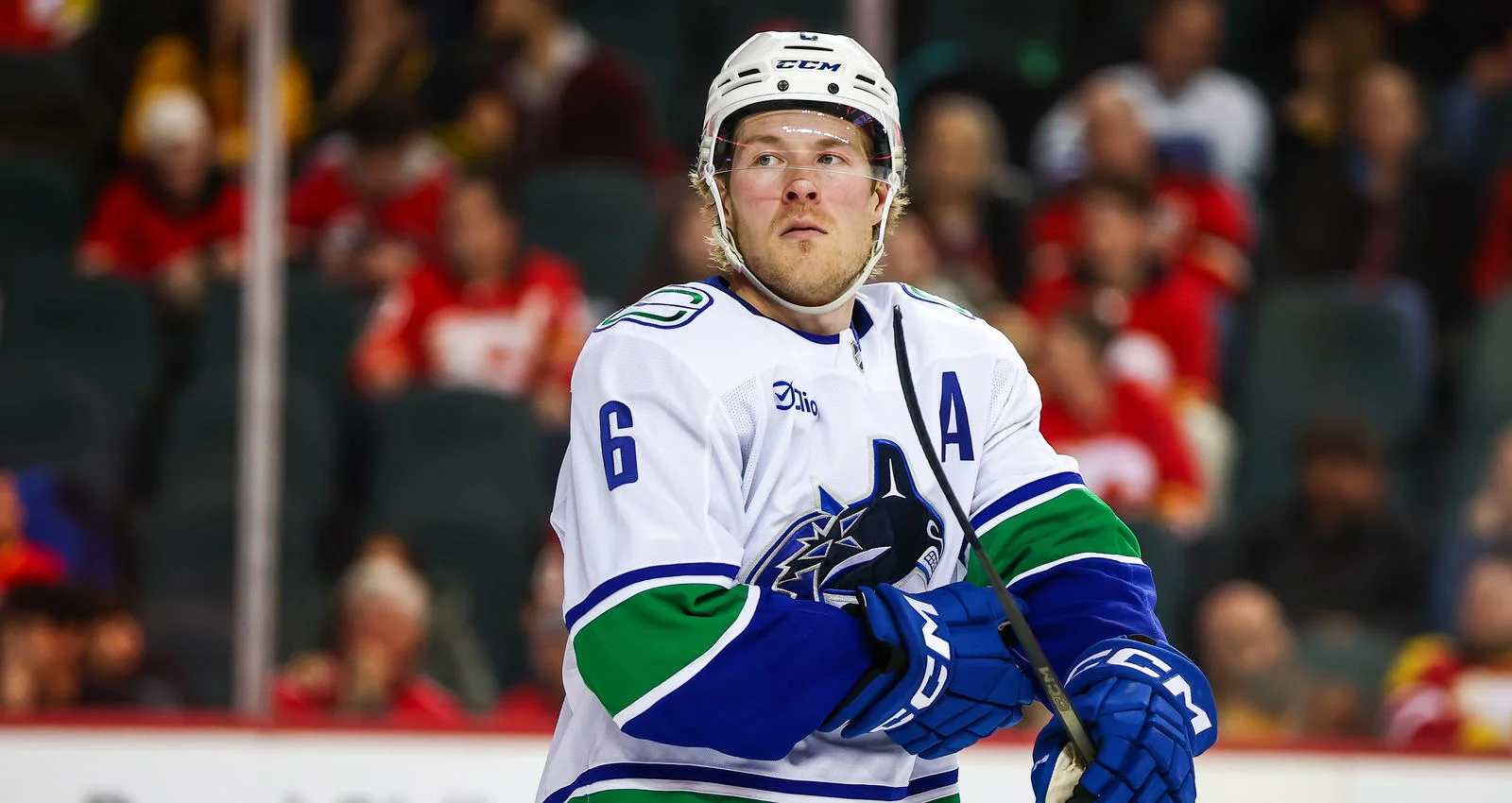 'I Think That's Exciting For Me, And Exciting Moving Forward': Brock Boeser Speaks On His And The Canucks' Future
Boeser, the longest-tenured Canucks skater, is approaching Vancouver's impending rebuild from a hopeful perspective.
'I Think That's Exciting For Me, And Exciting Moving Forward': Brock Boeser Speaks On His And The Canucks' Future
Boeser, the longest-tenured Canucks skater, is approaching Vancouver's impending rebuild from a hopeful perspective.
Rutherford’s candid admission—that the team lacks the caliber of talent required to chase a Stanley Cup—is a blunt assessment that aligns with the reality of a franchise stuck in a cycle of mediocrity. The fan base, long accustomed to the disappointment of the current core, appears primed for a total rebuild. With a top-three draft pick in the immediate pipeline, the organization has the draft capital to initiate a legitimate transition. However, the talent acquisition at the draft is only half the battle; the other half is the painful, expensive process of offloading the legacy contracts of an era that clearly failed to meet its promise.
The next GM is not being hired to tweak a roster but to perform surgery. The failure of the previous regime was not just a lack of wins, but a lack of foresight regarding long-term cap efficiency and team composition. Allvin paid the price for this, but the underlying volatility in the Vancouver front office remains, especially given Rutherford’s own tenure constraints. Expect the coming off-season to be defined by high-volume roster turnover rather than free-agent additions. The primary metric of success for the new hire will not be next season’s standings, but the ability to successfully liquidate the current payroll to clear space for a new generation.

For action-packed issues, access to the entire magazine archive and a free issue, subscribe to The Hockey News at THN.com/free. Get the latest news and trending stories by subscribing to our newsletter here. And share your thoughts by commenting below the article on THN.com or creating your own post in our community forum.