The 2025-26 NHL Western Conference playoff bracket presents a peculiar tactical landscape. For the professional observer, the intrigue lies not just in the potential outcomes, but in the glaring disparities in team composition and the high-stakes gamble inherent in the league’s current parity-driven structures. As the postseason commences, the Western bracket offers a study in contrast: established heavyweights facing structural instability, and emerging squads banking on goaltending variance to disrupt the status quo.
The headline fixture—Colorado Avalanche vs. Los Angeles Kings—serves as a reminder of the chasm between top-tier elite status and roster desperation. The Avalanche, bolstered by deadline acquisitions Nazem Kadri and Nicolas Roy, enter with a league-best offensive profile. With a goals-against average of 2.40, Colorado is essentially operating in a different weight class than an L.A. squad that limped into the final wild-card spot. Despite the late-season surge under Ken Holland’s front office, the Kings’ 29th-ranked offense, coupled with the absence of Kevin Fiala, suggests a mismatch. While L.A. has seen competent work from the tandem of Anton Forsberg and Darcy Kuemper, it is difficult to construct a plausible argument for an upset unless the Avalanche experience a complete, multi-game systemic collapse. Expectations favor a five-game route for Colorado.
Conversely, the matchup between the Vegas Golden Knights and the Utah Mammoth highlights the danger of relying on legacy momentum. The Golden Knights, despite integrating Mitch Marner, have found themselves mired in a mediocre statistical middle-ground, ranking 14th in offense and 12th in defensive efficiency. There is a palpable skepticism regarding their ability to effectively throttle a younger, hungry opponent. Utah, holding a 2-1 season series advantage, has proven capable of outperforming Vegas in efficiency metrics. Although Vegas possesses the high-leverage experience that often dictates deep runs, their inability to dominate on the stat sheet makes them vulnerable. If Utah’s goaltending holds firm, this series is the most likely candidate for a seven-game upset, signaling a potential shift in the division’s power dynamics.
Edmonton’s path remains tethered to the individual brilliance of Connor McDavid and Leon Draisaitl. As the back-to-back Western Conference champions, the Oilers command institutional respect, yet their recurring struggle persists: goaltending reliability. The integration of Connor Ingram as the starting netminder creates a significant variance point. Facing an Anaheim squad coached by Joel Quenneville, the Oilers are essentially betting that raw talent can overcome the Ducks' strategic speed and the goaltending prowess of Lukas Dostal. While an Oilers victory in seven games is the pragmatic forecast, it is predicated on their ability to suppress Anaheim's high-tempo transitions. The risk here is not skill, but the potential for the Oilers' defensive structure to buckle under pressure.
Perhaps the most compelling tactical collision is found in the Dallas Stars versus Minnesota Wild series. The series enters on a neutral footing following a 2-2 season split, but the internal metrics tell a complex story. Dallas holds home-ice advantage, which is a critical factor in a series this tightly coiled. However, the performance of Jake Oettinger remains a glaring liability. A save percentage hovering at .899 is historically insufficient for a deep run, placing an immense burden on the Stars’ forward depth. Stars Renew Rivalry With Wild As Playoffs Open With Must-Watch Series. Minnesota’s strategy is built on superior goaltending from the duo of Filip Gustavsson and Jesper Wallstedt and the impactful inclusion of Quinn Hughes on the blue line. While it remains a contrarian pick, the analytical edge currently shifts toward a six-game victory for the Wild, provided they continue to effectively negate the impact of Miro Heiskanen.
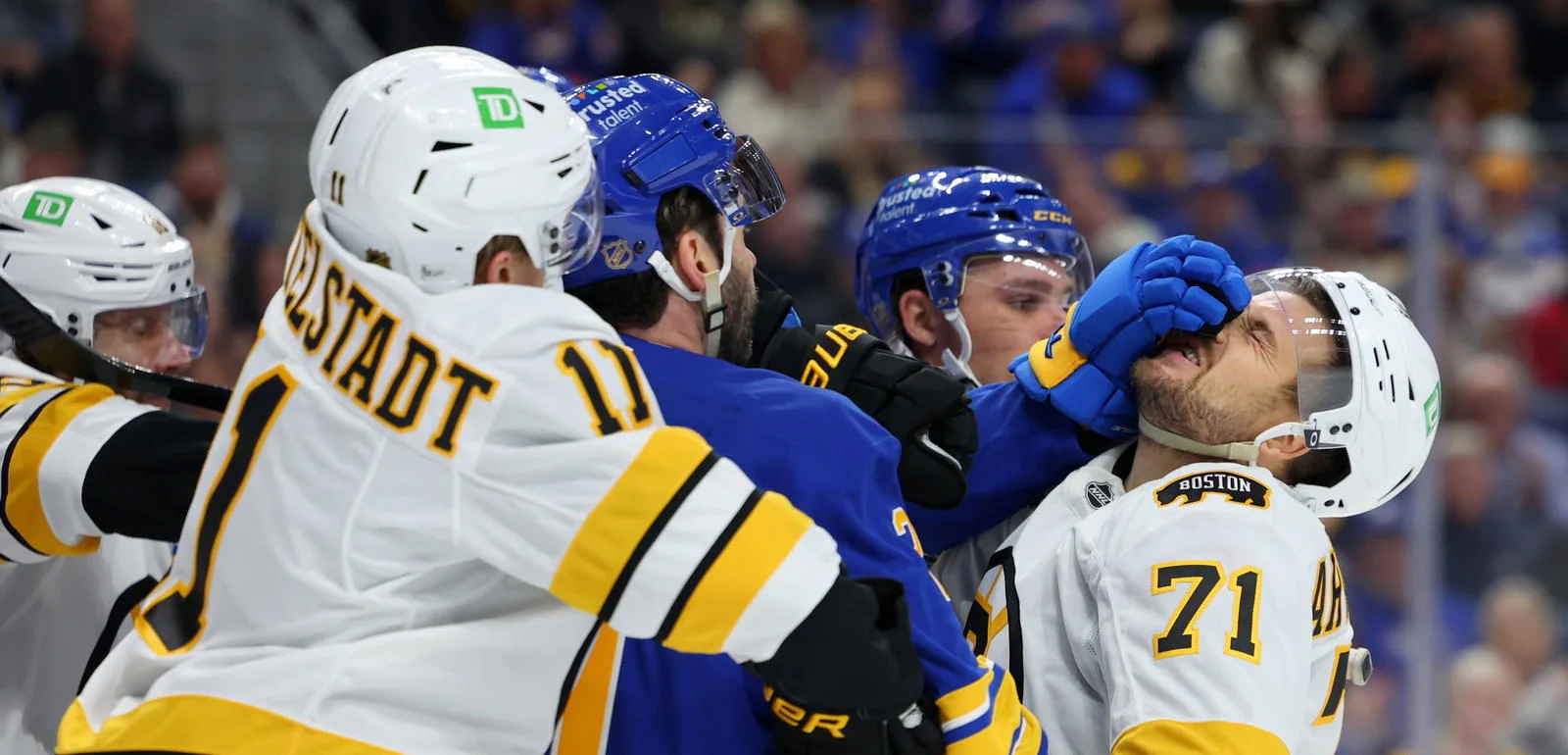 NHL Playoff Predictions 2026: Which East Teams Win Round 1? Expect Some Game 7s
For those tracking these outcomes, the primary indicator to watch is not final scores, but goaltending sustainability. In each of these four series, the team that manages the highest degree of consistency in net—rather than the team with the most potent offensive output—is likely to dictate the pace of the second round. The reliance on veteran cores for teams like Vegas and Edmonton vs. the systematic defensive construction of challengers like Minnesota and Utah will determine whether the status quo holds or whether we see a significant turnover in the Western hierarchy.
 Which NHL Players Have The Most To Prove In The Playoffs?
Ultimately, the postseason is where efficiency gaps widen. Teams that navigated the regular season with suboptimal metrics, such as Vegas or the Stars, must now reconcile those weaknesses against opponents optimized to exploit them. As these series develop, keep a close watch on the special teams battle, particularly for the Oilers and Avalanche, as power-play efficiency may be the only buffer against goaltending volatility. The coming weeks will reveal if the "house money" teams can maintain their current defensive discipline or if the weight of postseason pressure restores the dominance of the traditional favorites.
 Connor Ingram Is The Oilers' Playoff X-Factor

The true test for every team involved will be the transition from the chaotic, high-event style of regular-season play to the methodical, grinding nature of seven-game series. Expect the intensity to ramp up significantly by Game 3, at which point internal roster depth will cease to be a theoretical advantage and become a logistical necessity. Those who cannot adapt their depth lines to provide meaningful secondary scoring will likely see their seasons terminate prematurely, regardless of their star power.