As the NHL enters its postseason, the focus shifts from structural team evaluation to individual performance under high-leverage conditions. While regular-season metrics provide a baseline, the playoffs serve as the ultimate stress test for both compensation and career trajectory. For several prominent players and organizational units, the margin for error has effectively evaporated.
The Goaltending Paradox in Carolina
The Carolina Hurricanes head into the playoffs following a first-place finish in the Eastern Conference, a feat achieved despite goaltending efficiency that suggests significant exposure. The tandem of Brandon Bussi and Frederik Andersen finished the regular season with save percentages of .895 and .874, respectively. In the hyper-competitive environment of the postseason, relying on sub-.900 goaltending is a precarious strategy. Coach Rod Brind’Amour faces a critical tactical decision regarding his crease rotation for the series against the Ottawa Senators. Whether this becomes a situation where both netminders see action due to necessity or a managed rotation, the team's ability to advance to the Eastern Conference final hinges entirely on whether these figures can stabilize their production under pressure.
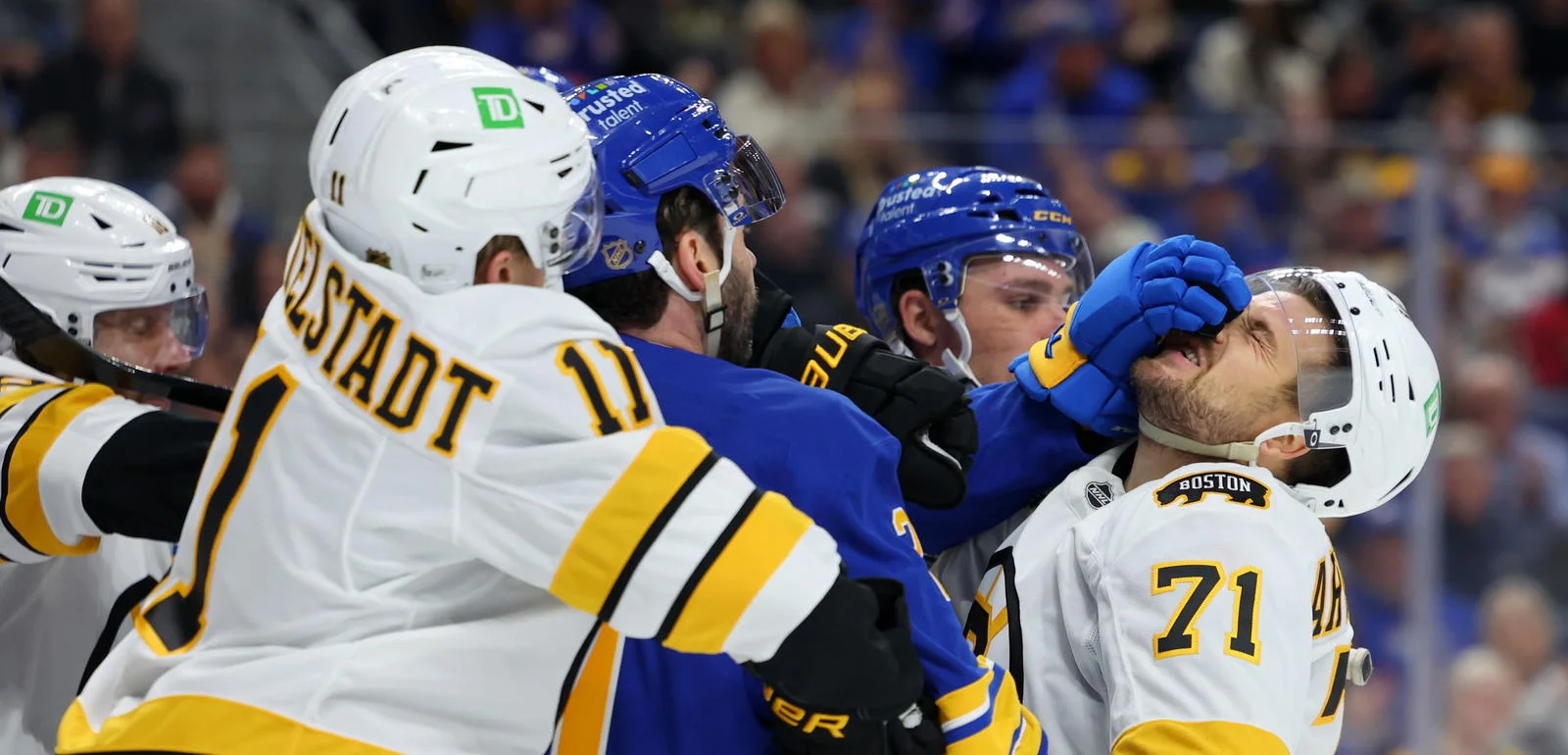 NHL Playoff Predictions 2026: Which East Teams Win Round 1? Expect Some Game 7s
The Eastern Conference Stanley Cup playoff matchups are set. Who is Adam Proteau picking to advance past the first round? Find out with our exclusive predictions.
NHL Playoff Predictions 2026: Which East Teams Win Round 1? Expect Some Game 7s
The Eastern Conference Stanley Cup playoff matchups are set. Who is Adam Proteau picking to advance past the first round? Find out with our exclusive predictions.
Mitch Marner’s Value Proposition
Few players enter this postseason with as much narrative baggage as Mitch Marner. Following his transition to the Vegas Golden Knights, Marner now occupies the highest cap hit on the roster, a position that necessitates elite-level contributions during high-stakes games. The narrative surrounding his performance has often been bifurcated—stellar regular-season output versus playoff output. With the Golden Knights aiming for a return to the form that saw them in the Cup final as recently as 2022-23, Marner’s ability to drive offensive results will determine whether he cements his role in Vegas’ culture or reinforces the skepticism that shadowed his tenure in Toronto. A deep run to at least the Western Conference final is the baseline for silencing those critics.
The Buffalo Sabres: Proving Legitimacy
Ending a 14-year postseason drought is a successful milestone, but the Buffalo Sabres now face the transition from “rebuilding team” to “contender.” This is a collective pressure point. While stars like Tage Thompson, Rasmus Dahlin, Alex Tuch, and Ryan McLeod have individual responsibilities, their success against the Boston Bruins depends on the maturity of the roster as a whole. A first-round exit might be acceptable for a young group in a vacuum, but the organization has spent years cultivating goodwill and expectation. For this core, the immediate goal is to demonstrate that their regular-season trajectory is sustainable at the pace and physicality required for playoff series victories.
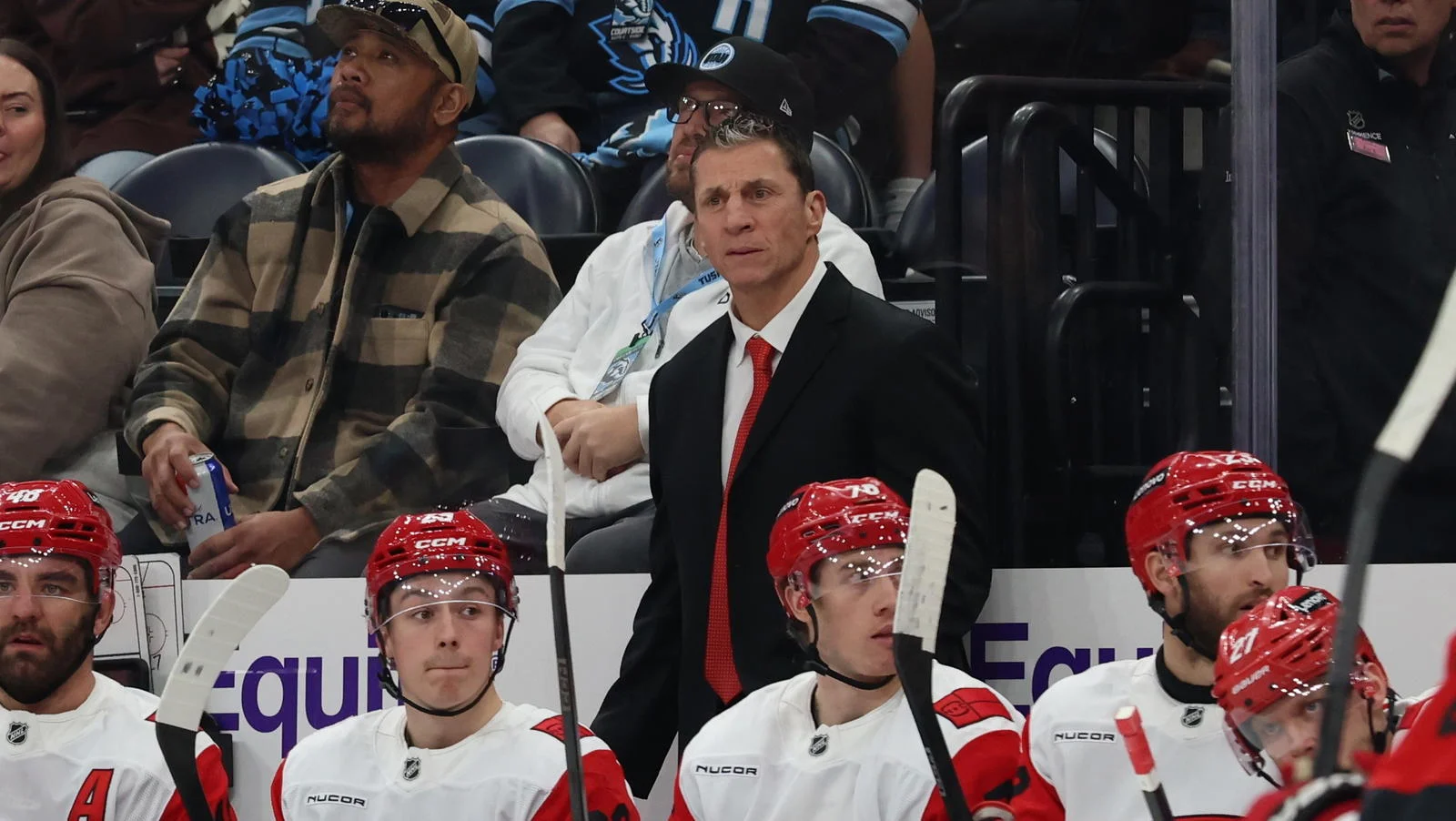 NHL Hot Seat Radar: Coaches With The Most To Prove In The Playoffs
Whether they're truly on the hot seat or not, coaches on the Hurricanes, Oilers and more NHL squads must prove they can bring their team to the next level in the Stanley Cup playoffs at last.
NHL Hot Seat Radar: Coaches With The Most To Prove In The Playoffs
Whether they're truly on the hot seat or not, coaches on the Hurricanes, Oilers and more NHL squads must prove they can bring their team to the next level in the Stanley Cup playoffs at last.
Jason Robertson’s Contractual Crossroads
The stakes for Jason Robertson extend beyond the current postseason and into his immediate financial future. As an RFA this summer, his performance against the Minnesota Wild in Round 1 will be heavily scrutinized. While his regular-season output of 45 goals and 96 points is elite, his playoff inconsistency—specifically a slow start in last year's opening rounds—remains a concern. He improved as the playoffs progressed, but the Dallas Stars require a complete performance from their top-line talent to navigate a difficult Western bracket. A deep run likely secures his long-term tenure in Dallas; a premature exit forces both the player and the front office into a much more difficult valuation conversation.

The common denominator across these scenarios is the shift in data interpretation. Regular-season aggregates are rarely predictive of postseason outcomes, and the players and teams listed above are in positions where individual legacy and organizational strategy are inextricably linked. The next two weeks will serve as a definitive data set for front offices when they move into the off-season cycle.
For action-packed issues, access to the entire magazine archive and a free issue, subscribe to The Hockey News at THN.com/free. Get the latest news and trending stories by subscribing to our newsletter here. And share your thoughts by commenting below the article on THN.com or creating your own post in our community forum.