The Nashville Predators: A Case Study in Organizational Entropy
Professional sports franchises often fear the "mushy middle"—that purgatory where a team is neither competitive enough to chase a championship nor disastrous enough to secure the top-tier draft capital required for a rebuild. The Nashville Predators have spent the better part of the last decade defining this existence. With a playoff absence stretching back beyond the first round since 2017-18 and a persistent inability to crack the upper echelon of the Central Division, the organization currently stands at a crossroads defined by misaligned assets and diminishing returns.
The statistical profile of this year's roster suggests an organization running on inertia. While a late-season surge of 9-5-1 briefly flirted with a postseason berth, it effectively served only to degrade the team’s position in the NHL draft lottery—a classic symptom of a front office prioritizing optics over long-term strategic health. With a goals-for average of 2.94 (20th league-wide) and a goals-against average of 3.23 (eighth-worst in the league), the Predators lack the distinct identity required to compete with divisional heavyweights like the Colorado Avalanche, Dallas Stars, and Minnesota Wild.
Perhaps most concerning is the regression of goaltender Juuse Saros. After posting a career-worst 3.13 GAA and an .894 save percentage, the organization finds itself locked into a contract extending through 2033 with an annual cap hit of $7.74 million. When your foundational defensive asset displays a three-year trend of decline, the luxury of "retooling on the fly" evaporates. The financial commitment here isn't merely an anchor; it is a rigid constraint on the incoming management team’s ability to pivot.
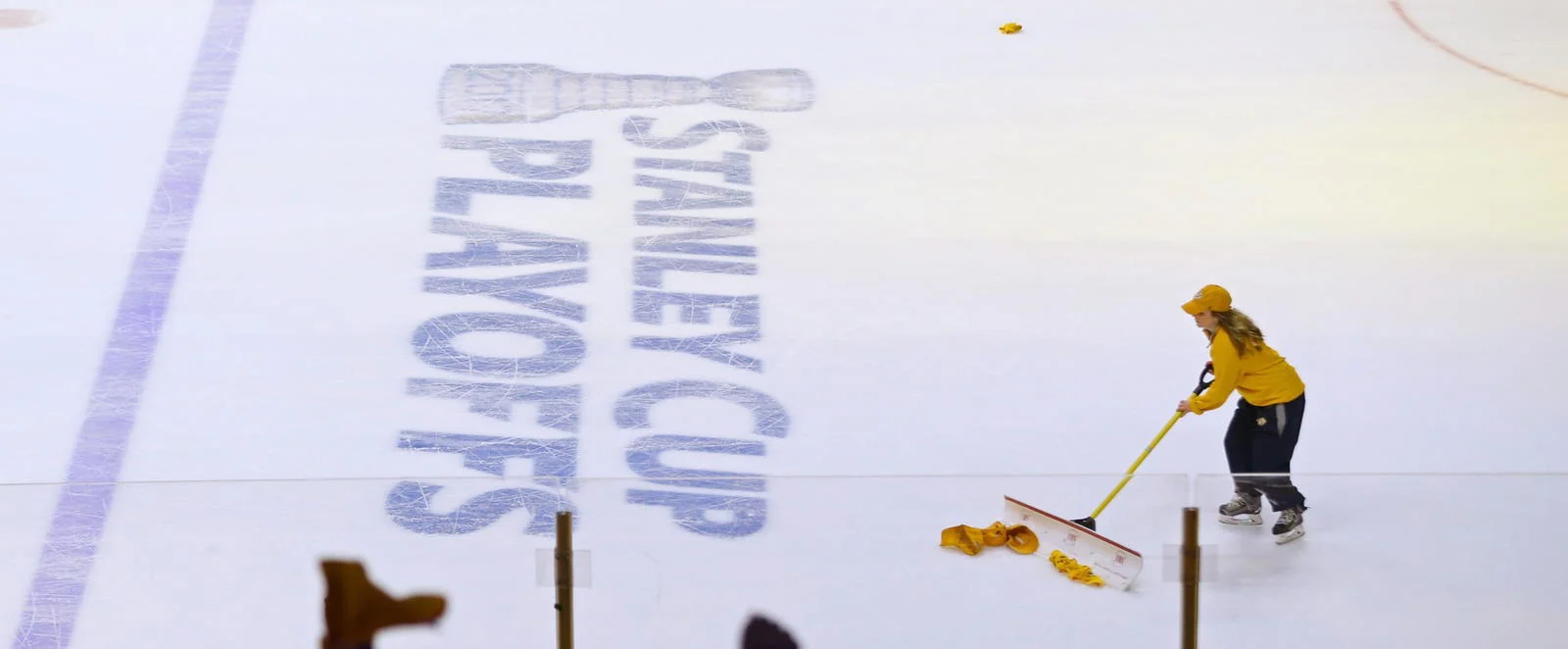 Nashville Predators Eliminated From Stanley Cup Playoff Contention
Nashville's thrilling season comeback falls short, missing the playoffs after a crucial loss and the Kings' victory secures their spot.
Nashville Predators Eliminated From Stanley Cup Playoff Contention
Nashville's thrilling season comeback falls short, missing the playoffs after a crucial loss and the Kings' victory secures their spot.
The recent attempt to buy instant relevance by incorporating veterans like Steven Stamkos, Jonathan Marchessault, and Ryan O'Reilly has largely failed to move the needle. These acquisitions were intended to bridge a gap, yet the lack of a true, league-altering superstar—the type of high-end, draft-developed talent currently anchoring the rosters of the Utah Mammoth or the Winnipeg Jets—remains the organization's primary deficiency. Filip Forsberg’s 73 points in 81 games and Roman Josi’s 55 points in 68 games, while respectable, do not constitute a core capable of outgunning the top-six talent pools of their conference rivals.
As the front office transitions, the $29.3 million in projected cap space represents a dangerous temptation. For an organization trapped in the middle, the instinctive move is often to chase external talent via trade. However, history dictates that teams offloading "name-brand" talent are rarely doing so because the assets are flourishing. Pursuing a short-term fix would likely only prolong the current cycle of mediocrity.

The mandate for the next General Manager is clear, though perhaps politically unpalatable: abandon the retool. Embracing a full-scale rebuild is the only viable path to acquiring the generational talent necessary to compete in the modern NHL. If the franchise continues to pursue a high-floor, low-ceiling model, it will remain tethered to the bottom half of the conference, regardless of coaching changes or minor roster tweaks. Head coach Andrew Brunette, presiding over a roster that is effectively capped out in potential, is unlikely to be the long-term solution in a market that demands a structural overhaul.
The Predators need to stop looking at the standings through the lens of individual game results and start evaluating the roster through the lens of a three-to-five-year championship window. If they cannot identify a path to that window, they must sell off veteran assets for draft capital, regardless of the immediate "pain" it incurs. For a team that has already exhausted the "retooling" playbook, the alternative—persisting in the same strategy—is not a plan; it is a concession to irrelevance.
For action-packed issues, access to the entire magazine archive and a free issue, subscribe to The Hockey News at THN.com/free. Get the latest news and trending stories by subscribing to our newsletter here. And share your thoughts by commenting below the article on THN.com or creating your own post in our community forum.