As the 2025-26 NHL regular season enters its final 48-hour window, the league finds itself in a state of stark bifurcation. While the Eastern Conference has finalized its postseason architecture, the Western Conference remains trapped in a period of intense volatility, where the results of the final few matches will dictate the path of several major contenders through the opening round of the playoffs.
Western Conference: The Pacific Volatility
The Western Conference hierarchy remains dangerously opaque, primarily due to the unresolved seeding within the Pacific Division. Currently, the Dallas Stars have secured their position against the Minnesota Wild, representing the only confirmed bracket entry in the West. This lack of certainty ripples outward, leaving the Vegas Golden Knights, Edmonton Oilers, Anaheim Ducks, and Los Angeles Kings in a state of high-stakes limbo that complicates scouting and travel logistics for coaching staffs.
The Vegas Golden Knights possess the most direct path to the division title, as a single point earned in their Wednesday night contest against the Seattle Kraken secures the top seed and a matchup against the Utah Mammoth. This scenario effectively forces the Oilers into a secondary role; Edmonton must win their finale and simultaneously rely on a complete Vegas collapse to alter their trajectory. Utah, meanwhile, has successfully locked in as the first wild-card seed following a clinical 5-3 victory over the Winnipeg Jets on Tuesday. Their position is now entirely reactive, as they wait for the Pacific Division's final dominoes to fall before they can begin concentrated preparation for their first-round opponent.
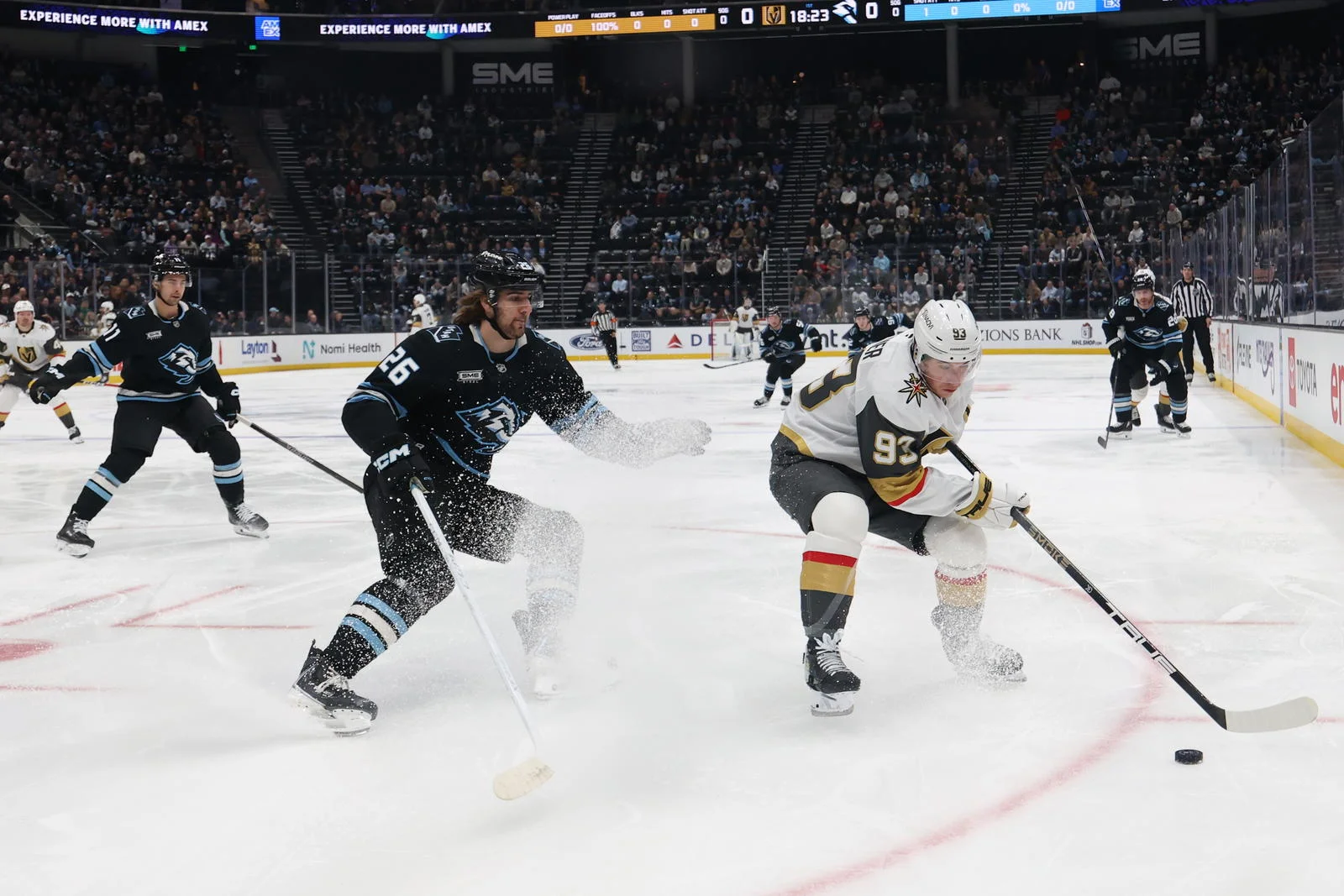 How Golden Knights Match Up Against 5 Potential Playoff Opponents
Eastern Conference: The Efficiency of Certainty
The Eastern Conference has effectively transitioned into a pre-playoff holding pattern, with all primary bracket configurations now cemented. The Boston Bruins, fresh off a decisive 4-0 shutout of the New Jersey Devils, have successfully claimed the first wild-card berth. This outcome mandates a series against the Buffalo Sabres, a pairing that many analysts view as a pivotal test of tactical discipline. Consequently, the Ottawa Senators are now locked into an inevitable and grueling encounter with the top-seeded Carolina Hurricanes.
Tuesday’s results also provided clarity regarding the Tampa Bay Lightning, who have successfully clinched home-ice advantage for their upcoming series against the Montreal Canadiens. The Canadiens’ 4-2 loss to the Philadelphia Flyers effectively removed any remaining ambiguity, granting Tampa Bay the critical organizational advantage of hosting the opening games. With these brackets established, the final slate of regular-season games in the East has shifted from high-intensity positioning to rest-and-recovery scenarios for teams already looking toward the postseason grind.
 Lightning Clinch Home-Ice Advantage for First-Round Series vs. Canadiens
Individual Accolades: The Statistical Squeeze
While the divisional seeding captures the attention of front offices, the individual trophy races provide a secondary, often ruthless, layer of intrigue. Nathan MacKinnon remains the frontrunner for the Maurice 'Rocket' Richard Trophy with 53 goals, a total that seems insurmountable given the lack of remaining games for his closest rivals. Cole Caufield has already finished his season with 51 goals, while Connor McDavid, at 48, faces a mathematical impossibility in catching MacKinnon during his final appearance. The result is a race that has quietly resolved itself in favor of Colorado’s star forward.
The Art Ross Trophy race remains the final meaningful piece of statistical theater, pitting the league's top offensive talents against one another in a direct battle of efficiency. Connor McDavid enters his final game with 134 points, holding a lead that is both significant and precarious. Nikita Kucherov, trailing with 130 points, faces a final opportunity to bridge that four-point gap when Tampa Bay concludes their schedule against the New York Rangers. With Nathan MacKinnon also looming in the conversation at 127 points, the Art Ross race will serve as the final competitive narrative arc of the season.
In the rookie scoring hierarchy, the results are near conclusion, with Ivan Demidov maintaining his lead at 62 points. Beckett Sennecke remains the only credible threat, sitting at 60 points with one game left to make an impact. Matthew Schaefer, currently at 59 points, has already finished his duties, leaving his fate entirely in the hands of Sennecke’s final performance.

Strategic Implications and Structural Rigidity
The fundamental takeaway for the professional observer is the divergence in operational stakes between the two conferences. The East has reached a point of administrative equilibrium where the primary concern is health and systems maintenance. In contrast, the West’s bracket integrity remains subject to a volatile, last-minute calculation in Las Vegas, illustrating the inherent risks of a conference that relies on high-variance outcomes in its final round of matches. For teams like the Golden Knights, the pressure to secure a favorable path is intense, as a failure to earn a single point could trigger a ripple effect that reshapes the entire Western playoff bracket.
This period of transition serves as a diagnostic tool for how rosters handle immediate, high-stakes pressure before the postseason begins. The shift from the fluid, speculative nature of the regular season to the rigid, binary nature of the playoffs is rarely seamless. Organizations that can successfully balance the intensity of these final games with the necessary conservation of physical capital will likely emerge with a distinct advantage as the intensity ramps up next week.
For access to the entire magazine archive and a free issue, subscribe to The Hockey News at THN.com/free. Stay updated via the newsletter here.