The Financial Calculus of the Macklin Celebrini Extension
The San Jose Sharks find themselves at a pivotal juncture in their franchise trajectory, transitioning from the long-term rebuild phase into the reality of managing a generational asset. Macklin Celebrini, two years removed from being the first overall selection, is now eligible for an extension on his entry-level contract. Sheng Peng of San Jose Hockey Now has reported that the sentiment is mutual regarding a long-term commitment, with the player explicitly stating a desire to remain in San Jose.
However, the internal math for the Sharks front office has grown significantly more complex. Celebrini’s rookie output—25 goals and 63 points over 70 games—was tempered by a -31 plus-minus rating. Yet, a closer examination suggests that figure was a byproduct of a roster-wide deficit rather than individual liability; HockeyReference data indicates his Expected +/- was 0.0, suggesting he was effectively neutralizing his opposition despite the team’s systemic struggles. That defensive ambiguity has evaporated this season. Celebrini posted 45 goals and 115 points across 82 games, maintained a +8 rating, and increased his workload to an average of 21:19 of ice time per night. He is no longer just a focal point; he is arguably the sole driver of the Sharks’ competitive shift, illustrated by the widening chasm between his 115 points and Will Smith’s 59 points.
The transition from a promising rookie to a legitimate Hart Memorial Trophy contender has recalibrated the expected valuation of his next deal. While the rookie season saw him finish behind Lane Hutson and Dustin Wolf in Calder voting, his international performance at the 2026 Winter Olympics—10 points in six games en route to a silver medal—has underscored his ability to perform against top-tier competition.
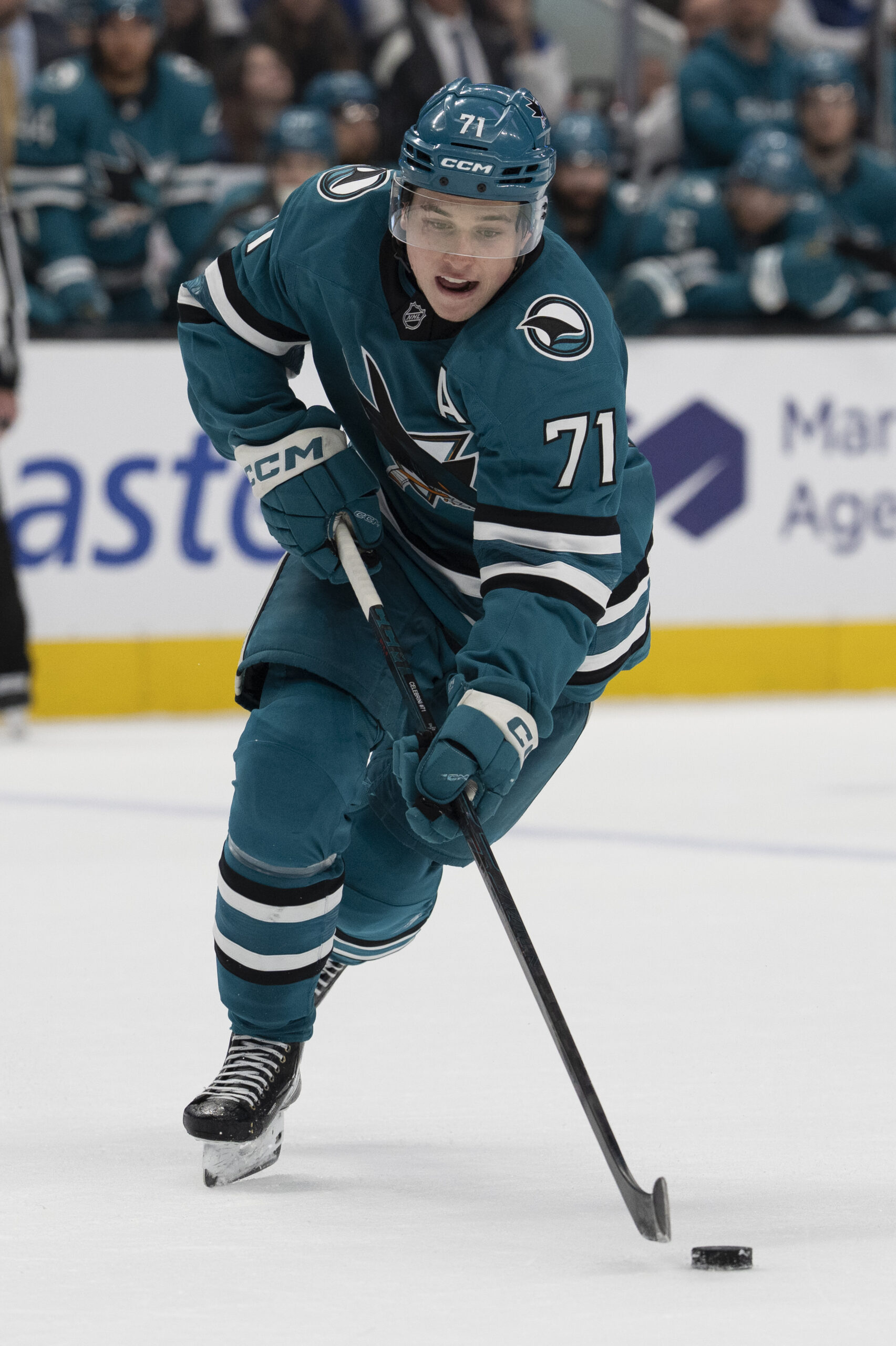 This negotiation will likely become the anchor for the entire restricted free agent (RFA) market. Connor Bedard enters the final stages of his entry-level contract on July 1st, creating a natural tug-of-war for the market-setting benchmark. Agents surveyed by James Mirtle, Chris Johnston, and Michael Russo of The Athletic have speculated that figures ranging from $10 million to $17 million annually are on the table, depending on the willingness to sacrifice term. If Celebrini chooses to mirror the structure of Kirill Kaprizov’s $136 million, eight-year deal, he would be well within the established precedent. Should he decide to leverage his standing to surpass those numbers, the league could see its first $140 million contract.
The urgency for the Sharks is dictated by structural changes to the collective bargaining landscape. A rule change taking effect this September will reduce the maximum allowed contract duration from eight years to seven. This creates a small window for San Jose to secure the maximum term, an advantage that will evaporate shortly. While Celebrini is under contract through the end of the next season and will not reach unrestricted free agency until after the 2030-31 campaign, delaying a long-term commitment could leave the organization vulnerable to an inflationary cap environment that only serves to make the eventual price tag more volatile.
For the Sharks, this is less about the current cap space and more about the opportunity cost of waiting. By forcing the hand of the market, the team risks paying a premium for a player who, in the eyes of league observers, is already producing at a level that justifies unprecedented compensation. The looming presence of the Bedard negotiations will likely force both camps into a conservative posture, waiting to see who blinks first. If San Jose prioritizes long-term stability, they would be wise to pursue an eight-year deal immediately; if they dither, the changing rules and the rising ceiling of the RFA market will likely strip them of that option, forcing them into a shorter, more expensive deal down the road.
The outcome of these talks will define the Sharks’ competitive window for the next decade. While Celebrini’s public commitment to the team is a positive variable, the cold economics of the league suggest that the difference between an early extension and a later one may manifest in millions of dollars of annual cap hit—a difference that could determine the quality of the supporting cast the Sharks are able to build around their franchise center.