The Cost of Near Misses: Why Arteta’s Arsenal Face a Crisis of Confidence
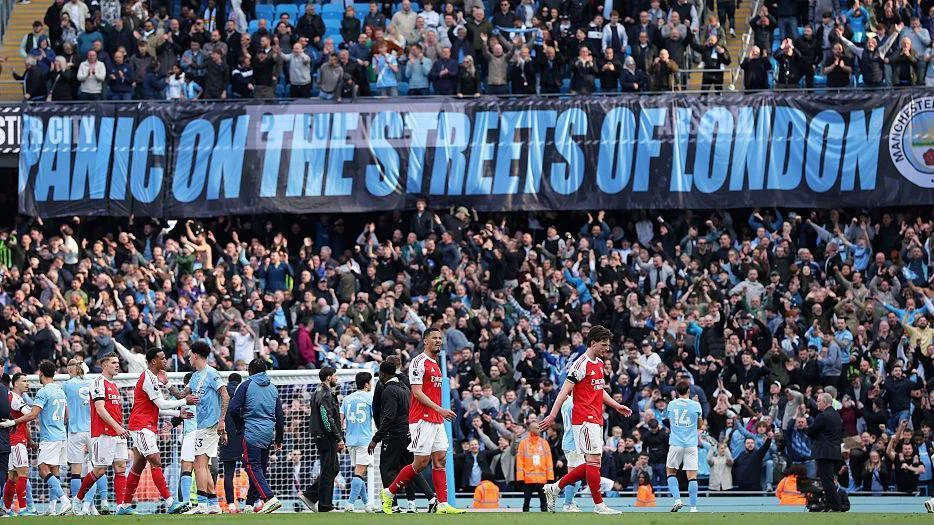
As Mikel Arteta paced the Etihad Stadium pitch following a 2-1 defeat to Manchester City, a banner draped from the stands offered a tauntingly sharp prognosis: "Panic on the streets of London." It was a moment of brutal, unvarnished reality for a manager whose side has spent the better part of the season in the Premier League’s driver’s seat, only to find themselves suddenly staring down the barrel of a familiar, uncomfortable narrative that has haunted the club for years. This is no longer merely a statistical setback; it is an existential test of the project Arteta has built over the last several seasons, as the aura of invincibility that defined their mid-season form evaporates under the harsh light of a title run-in.
The result, which cuts Arsenal’s lead to just three points—with Manchester City holding a game in hand at Burnley—is statistically significant, but the underlying data is even more troubling. While the Gunners retain a marginal advantage in goal difference at +37 to +36, the psychological momentum has undergone a violent shift toward a City side operating with the clinical, terrifying inevitability of a veteran title-chaser. City remains unbeaten in ten league fixtures, a streak built on the kind of mechanical consistency that Arsenal is currently failing to replicate. By contrast, Arsenal’s recent form has curdled; this defeat marks their second consecutive loss in the Premier League, an uncharacteristic stumble unseen since December 2023 that raises difficult questions about the durability of their defensive shape and offensive fluidity when the heat is turned up.
The Erosion of Tactical Assurance
For those tracking the broader trends, the numbers are sobering and indicate a team suffering from fatigue, both physical and mental. Arsenal has dropped four of their last six matches across all competitions, a slump that suggests their high-intensity, press-heavy system is hitting a wall just as the Champions League semi-finals arrive. While they remain competitive in Europe, the lingering fear in north London is that this squad—much like those before it—is drifting toward the "nearly men" label, a devastating descriptor for a group that has spent significant capital to close the gap. The challenge for Arteta is no longer just tactical refinement or minor squad rotation; it is psychological management on a massive scale. He must prevent this late-season friction from calcifying into a systemic failure of nerve, a phenomenon that has previously defined the "Arsenal way" during the final weeks of high-stakes campaigns.
Personnel and Performance Under Pressure
In the post-match autopsy, critics have zeroed in on Arteta’s personnel decisions, specifically the decision to keep £64m forward Viktor Gyokeres on the bench for such a pivotal encounter. This choice feels increasingly questionable when one considers the specific tactical profile needed to exploit the gaps in City’s backline; failing to deploy his most potent physical threat in a game of this magnitude suggests a degree of tactical paralysis or misplaced caution from a manager who usually thrives on proactive intervention. While the manager remains publicly defiant, insisting that his side still holds the mathematical advantage, the optics of players like Kai Havertz missing crucial, point-blank chances in the dying embers of the game suggest a team suffering from collective vertigo. When top-tier teams begin to miss routine opportunities, it is rarely a fluke; it is usually an external manifestation of the inner tension that stems from knowing the margin for error has effectively vanished.
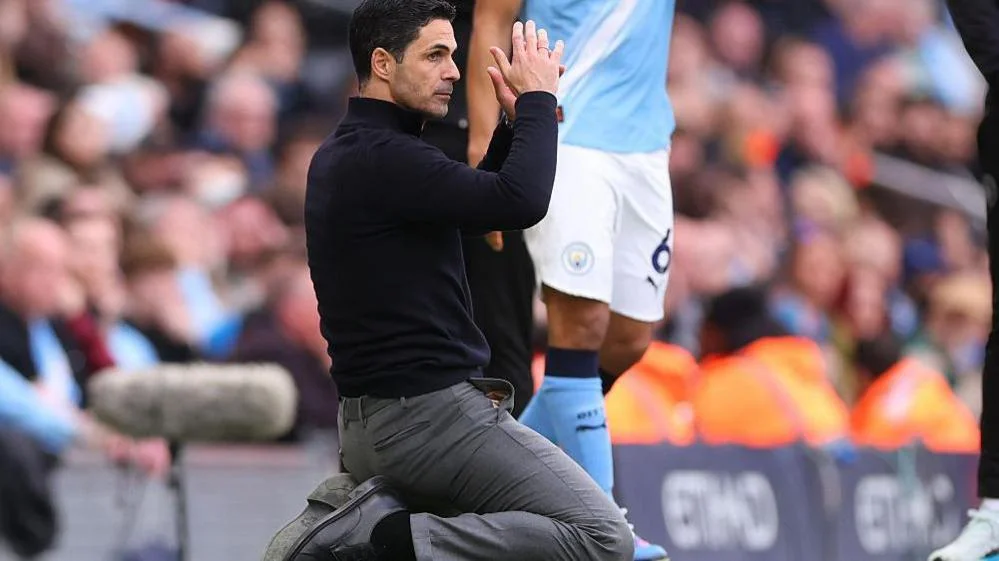
Arteta has previously dismissed the necessity of "picking up" his players, attempting to frame the current tension as an expected, even healthy, component of a high-stakes campaign. Yet, as he acknowledged, the margin for error has evaporated, and his rhetoric is beginning to sound like an attempt to reassure himself as much as the public. Whether this 2-1 result serves as a mere hurdle to be overcome or the definitive turning point in the hunt for their first league title in 22 years remains the central question. A team can recover from a loss, but recovering from the erosion of belief is a significantly harder task, particularly when the opponent is as unforgiving as Pep Guardiola’s Manchester City.
Implications: The Price of the "Process"
The significance of this result extends well beyond the points table; it calls into question the long-term sustainability of Arteta’s specific philosophy under maximum pressure. For years, the "process" in north London has been built on the premise that technical discipline would eventually supersede the volatility of the Premier League. However, the current reality highlights a potential ceiling to that theory. If Arsenal fails to convert this dominant position into a trophy, the inquest will be far-reaching, potentially impacting the club’s ability to attract top-tier talent and shifting the narrative around Arteta’s tenure from "builder" to "perennial runner-up." The future outlook for the club rests on their ability to recalibrate during the upcoming fixtures, but the damage to their collective confidence may already be too deep to repair before the final whistle of the season.

Further Analysis
The intensity of the Manchester City versus Arsenal fixture highlights the current friction at the top of the Premier League. For those looking to keep pace with these clubs, you can follow your specific team via BBC Sport or tune into the Football Daily podcast for tactical breakdowns that go deeper into individual player positioning and defensive errors.
Stay updated on the latest league developments by subscribing to match alerts sent directly to your device. The reality of modern sports reporting is that the narrative is rarely settled on the pitch alone; it is sustained by this constant stream of metadata and digital engagement, which helps track the minute-by-minute evolution of team momentum throughout the season.