Carrick steadies the ship as United eye Champions League return
By Simon Stone, Manchester United reporter at Stamford Bridge | 19 April 2026
A Study in Calculated Composure
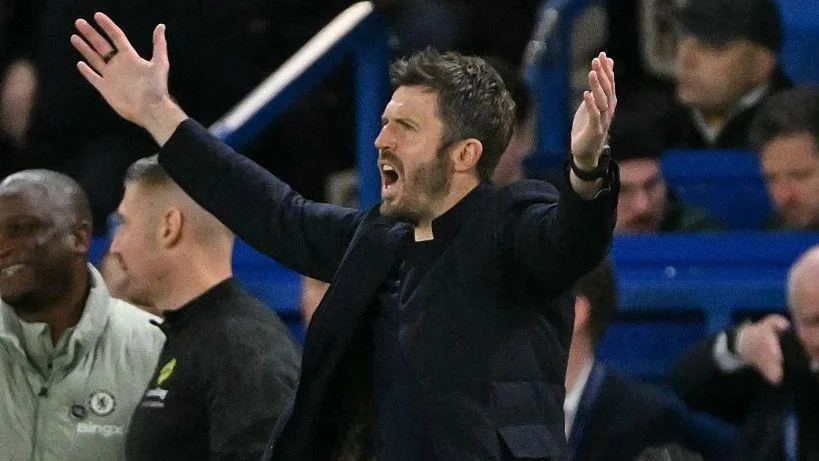
Michael Carrick remains an island of composure in an environment historically defined by reactionary outbursts and boardroom volatility. Following a gritty 1-0 victory at Stamford Bridge—a result that keeps Manchester United firmly in the hunt for a Champions League spot—he flatly dismissed the atmospheric panic that followed last Monday's Leeds home defeat. "You can lose games of football. It's about bouncing back. The world doesn't end because we lose," he remarked, a sentiment that serves as both a philosophical departure from the high-pressure rhetoric of his predecessors and a practical recalibration of expectations for a squad that has long struggled with internal consistency.
The win against Chelsea was far from a tactical masterpiece, yet it served its exact, narrow purpose in the wider context of the Premier League season. In a campaign where United's post-Ferguson managers have largely found Stamford Bridge a psychological and tactical graveyard for their top-four ambitions, the pragmatic nature of this win counts for significantly more than aesthetic flair. While Chelsea struck the woodwork three times, exposing structural vulnerabilities in United’s deep block, the visitors’ ruthless efficiency in the final third proved decisive. This shift toward opportunistic, high-percentage play marks a departure from the aimless possession-based philosophies that frequently plagued the side during the autumn, suggesting that Carrick has prioritized results over the perfection of a system that his squad may not currently possess the discipline to maintain.
The Resilience of a Mismatched Backline
This result stands as the most impressive tactical victory of the Carrick era, particularly when analyzed through the lens of a defensive injury crisis that reached a breaking point late in the week. With Leny Yoro sidelined, the manager was forced to navigate the absence of his entire projected first-choice center-back pairing, alongside the continued unavailability of Lisandro Martinez and Harry Maguire. This desperation move forced a makeshift defensive pairing of 19-year-old Ayden Heaven and veteran Noussair Mazraoui, two players who, under ordinary circumstances, would have had zero operational synergy. Relying on little more than rudimentary walkthroughs to establish a defensive line, the pair showed remarkable discipline against a Chelsea attack that thrives on finding space between the lines.
Carrick’s specific praise for Heaven—"Ayden has not played a lot of football recently... he was prepared, and he took it in his stride magnificently well"—is telling of a man-management style that leans heavily on psychological readiness rather than just technical rote learning. By simplifying the instructions for his defenders, Carrick managed to suppress the chaos that typically manifests when United’s starting XI is depleted, proving that he can extract functional performances from a secondary tier of the roster when the primary options are stripped away.
Data and the Illusion of Stagnation
The manager’s steady hand has been a point of persistent contention among the vocal segments of the fanbase and media. While his calm demeanor was initially framed as a virtue, a contingent of critics interpreted the post-February 10 draw at West Ham as evidence of tactical stagnation or an inability to adjust to low-block opposition. However, a granular look at the data suggests that these critiques are fundamentally disconnected from the team's output; since he took the reins, United have collected points at a rate that mathematically surpasses their peer group in the chase for Europe, effectively stabilizing a ship that appeared to be listing heavily toward mid-table mediocrity during the opening four months of the season.
The clinical nature of the winning goal was a testament to the singular influence of Bruno Fernandes, who notched his 18th league assist of the season. By positioning himself as a primary creative conduit, Fernandes has moved within two of the all-time record, serving as the bridge between Carrick’s pragmatic structure and the individual brilliance required to unlock deep-sitting opponents. His precise delivery for a clinical Mattheus Cunha finish was not an isolated incident of luck, but rather the manifestation of a team finally leveraging its most potent offensive asset in a way that creates high-quality scoring opportunities, even when the broader team performance remains modest.
Strategic Implications and the Road to May
As the season reaches its final five matches, the mathematical reality is that United requires only eight points to secure a Champions League berth, a target that was unimaginable during the dark stretches of the winter. This path is narrow but functionally clear, requiring a combination of disciplined ball management and continued efficiency from players like Cunha and Fernandes. Because Liverpool must still navigate high-stakes fixtures against Everton and Chelsea, in addition to a high-pressure trip to Old Trafford on 3 May, the points threshold required for United to qualify may ultimately settle at a level that accommodates one or two further missteps.
Looking ahead, Carrick’s future remains a subject of inevitable speculation, as his current contract status and the looming specter of a permanent managerial appointment dominate the conversation at Old Trafford. However, by silencing the immediate clamor with a string of effective, if unflashy, results, he has significantly altered his own leverage. If he successfully guides this squad back into Europe's elite competition, the club’s board will face a difficult decision: whether to stick with a manager who has proven he can deliver under extreme duress, or to pursue a "project" hire whose pedigree might be more impressive on paper but less adaptable in the harsh realities of the Premier League.