The math behind Leeds United's survival bid
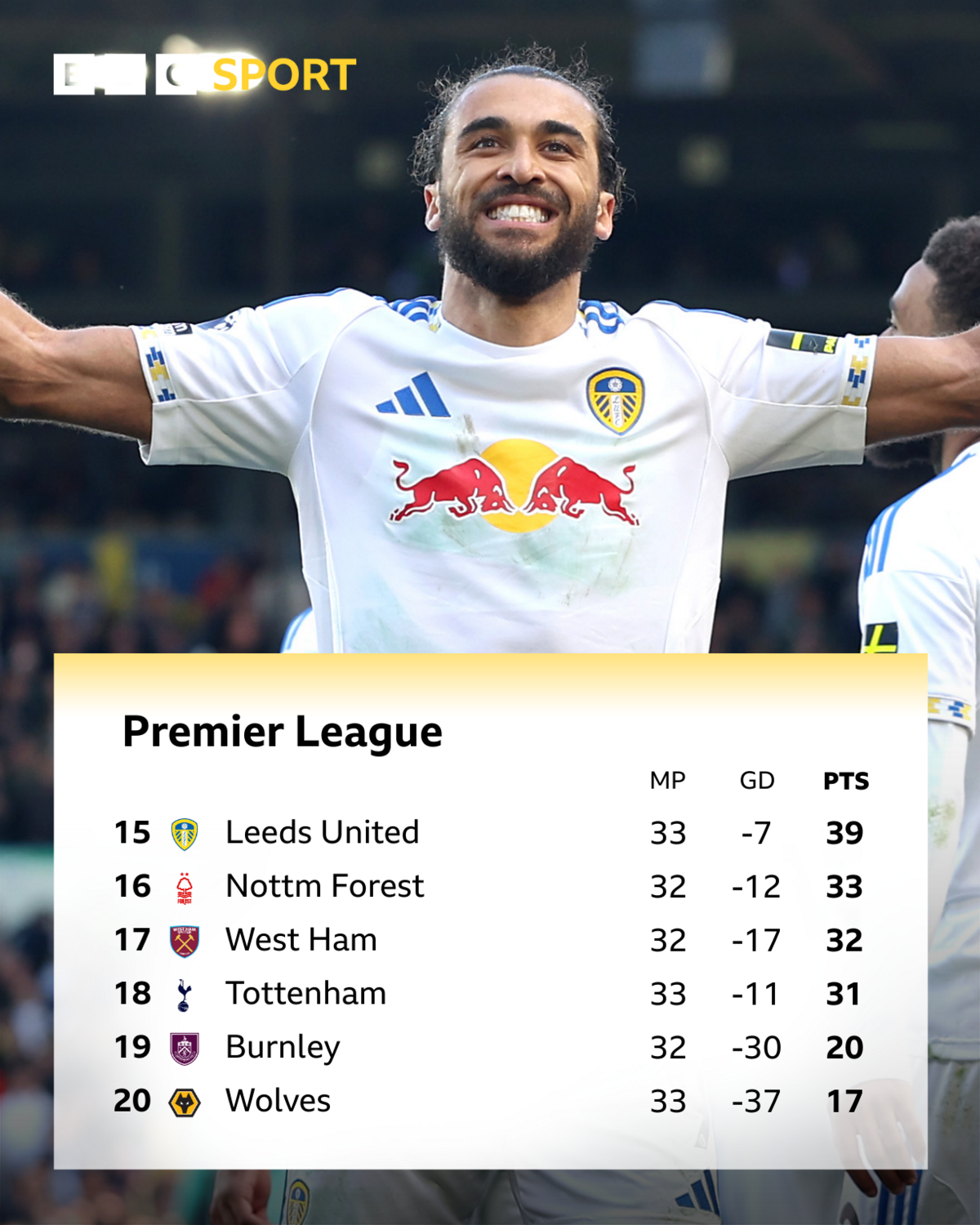
Following consecutive victories, including a gritty 2-1 result at Manchester United and a recent defeat of Wolves, Leeds United find themselves in a position of significant structural advantage. A nine-point cushion above the relegation zone—narrowed slightly to eight after Tottenham’s draw with Brighton—has the Elland Road faithful eyeing Premier League safety with a level of confidence not seen earlier in this volatile campaign. While the supporters are already preparing for another year in the top flight, the cold, hard numbers offer a more nuanced view of why this cushion is likely sufficient, yet not entirely infallible until the final whistle of the thirty-eighth game.
Manager Daniel Farke remains publicly cautious, telling Match of the Day, "I still think we need to stay with our foot on the gas," yet his visible relief during post-match celebrations suggests he knows the heavy lifting is largely done. He is performing the classic managerial role of tempering expectations to prevent complacency, as any drop in performance levels now could invite unnecessary pressure. With only five games remaining, the fight for survival primarily involves Tottenham, West Ham, Nottingham Forest, and Leeds, as Wolves and Burnley appear all but destined for the drop. The separation between these bottom-tier clubs is no longer just about talent; it has become a grueling contest of attrition, physical recovery, and the ability to grind out results against top-tier opposition.
Statistical safety and the historical threshold
While the manager avoids declaring the mission accomplished, the data points toward an inevitable survival. No team has been relegated from the Premier League after securing 39 points within their first 33 matches of a 38-game season. By reaching this total, Leeds has already surpassed the 38-point threshold held by the 2010-11 Birmingham side that ultimately succumbed to the drop. Historically, 36 points have sufficed for top-flight preservation in every campaign since 2015-16, putting Leeds in a mathematically comfortable position that would require an unprecedented collapse of form to undo.
The statistical probability of relegation for Leeds is currently negligible when modeled against the remaining points available to their direct competitors. When a team clears the 38-point mark this late in the season, they are essentially banking on the idea that the bottom three will fail to achieve the required win-rate to catch them. Because those clubs in the relegation zone must secure wins at a frequency they have not demonstrated all season, the probability of them achieving a perfect run while Leeds fails to pick up even a single point is statistically remote. This creates a psychological buffer as much as a numerical one; the pressure to perform transitions from the survival-bound club to the clubs chasing them.
The path ahead and tactical advantages
Momentum currently favors the West Yorkshire side, which remains unbeaten in four matches, a vital streak during a period where most struggling teams find it impossible to string points together. Their remaining schedule also appears the most manageable of the strugglers. A home fixture against a potentially already-relegated Burnley on May 1st represents a significant opportunity to finalize their safety without having to rely on the results of other clubs. While other teams in the scrap are staring down the barrel of difficult fixtures against European-contending squads, Leeds has the luxury of facing a side that has little to play for but professional pride, which inherently lowers the intensity of the resistance they will face.
Conversely, rivals like Nottingham Forest face a gauntlet of European-chasing teams, including testing away trips to Chelsea and Manchester United. These fixtures are essentially "must-win" games for those top-four contenders, meaning the intensity from the opponent will be at its absolute maximum. For a club like Forest, finding points in such an environment requires a level of tactical perfection that is rarely sustainable over five consecutive games. The math favors the schedule-holder, and right now, that is definitively Leeds.
Implications: The cost of the struggle
The significance of this survival bid goes beyond the current season, as the financial and structural consequences of relegation from the Premier League have become increasingly severe. Clubs that avoid the drop maintain access to the league's massive broadcasting revenue, whereas those who fail are forced into immediate, drastic budget cuts and the potential fire sale of key squad members. For Leeds, the ability to reset after this season while maintaining their status means they can focus on long-term squad development rather than immediate financial restructuring. The club's leadership will likely view this campaign as a cautionary tale regarding the narrow margin between mid-table respectability and the existential threat of the Championship.
Looking toward the future, the resilience shown in the final stretch will serve as a foundational moment for Farke’s tenure. A manager who successfully steers a club through a relegation dogfight gains a unique type of leverage in the locker room, as they have proven their ability to stabilize a sinking ship during high-stress moments. The off-season will provide an opportunity to address the tactical shortcomings that led to this predicament, but the immediate victory here is the preservation of the club's status. The real challenge for the organization will be ensuring that "survival" is not the permanent ceiling, and that the lessons learned from this year translate into a more proactive recruitment and tactical strategy in the coming transfer windows.
Manager Daniel Farke remains characteristically measured, stressing that Leeds United has not yet secured the point tally required for safety. For the full technical breakdown on current standings, you can examine the Premier League table or dig deeper into broader football trends.

Further Context
- Latest Leeds United news, analysis, and fan perspectives
- Listen to the latest Don't Go To Bed Just Yet podcast
- Direct Q&A: Submit your specific inquiries regarding the squad
As the season nears its conclusion, the volatility of these final fixtures remains the only constant. Whether Farke’s tactical caution is a product of genuine concern or standard managerial pragmatism, the upcoming weeks will prove decisive for the final league table.