The Crease Chaos: Why Goaltending Decisions are Defining the Opening Round
The NHL postseason is traditionally billed as a showcase for the league's elite, yet the opening weekend of this year's playoffs highlights a recurring structural volatility: the goaltending committee. While championship-pedigree organizations rely on singular, trusted anchors, a significant swath of the bracket is currently defined by indecision, late-season reclamation projects, and performance-based instability.
The tactical success of the Minnesota Wild and the Carolina Hurricanes in their respective openers serves as a stark reminder of the high-stakes gamble inherent in netminder selection. Minnesota’s decision to elevate Jesper Wallstedt (2.61 GAA, .916 SP) over the more experienced Filip Gustavsson paid immediate dividends, with Wallstedt stifling the Dallas Stars in a 6-1 rout. Similarly, Carolina’s Rod Brind'Amour bypassed the statistically safer Brandon Bussi in favor of Frederik Andersen. Despite Andersen’s pedestrian regular-season peripherals—a 3.05 GAA and .874 SP—he delivered a 22-save shutout against Ottawa. These maneuvers underscore a growing trend where coaching staffs prioritize current form and situational readiness over season-long volume metrics.
However, beyond the successful gambles lies a deeper concern for several contenders. The Buffalo Sabres, fresh off their first Atlantic Division title in 14 years, enter the playoffs with a volatile crease. While Ukko-Pekka Luukkonen (2.52 GAA, .910 SP) is slated for the Game 1 start, his season was marred by recurring lower-body injuries. The organizational lack of a concrete succession plan, evidenced by the mid-April rotation through three different goaltenders, leaves head coach Lindy Ruff with minimal margin for error. If Luukkonen falters, the transition to Alex Lyon or waiver-wire acquisition Colten Ellis represents a reactionary pivot rather than a strategic depth play.
The Colorado Avalanche find themselves in a paradox of success. Having shared the William M. Jennings Trophy, Scott Wedgewood (.921 SP) and Mackenzie Blackwood (.904 SP) offer head coach Jared Bednar legitimate options. Yet, history suggests that goaltending tandems in the playoffs are often one bad night away from becoming a distraction. Mirroring the previous Boston Bruins model, Colorado’s path to a deep run likely hinges on Bednar’s willingness to stick with a "hot hand" approach, a strategy that shifts the pressure from the crease to the coaching bench.
Perhaps no situation is as fraught with systemic failure as the Edmonton Oilers. After parting ways with Stuart Skinner, the acquisition of Tristan Jarry—who managed an abysmal 3.86 GAA and .858 SP—has been an unmitigated disaster. The burden of expectation now rests on Connor Ingram. While Ingram’s late-season emergence secured him the starter’s role, his lack of postseason success—zero wins in four career playoff starts with the Nashville Predators—raises legitimate questions about his ability to insulate a team that has historically folded under inconsistent goaltending.
In the Pacific, the Los Angeles Kings are facing a crisis of confidence. Darcy Kuemper’s post-Olympic collapse, marked by an .867 save percentage and a 3.27 GAA, has forced Anton Forsberg into the spotlight. Forsberg’s late-season surge is statistically undeniable, but his lack of any postseason experience—despite an 11-year NHL career—makes him a terrifying variable for a team that previously relied on Kuemper’s pedigree. The contrast between Kuemper’s 2022 championship experience and Forsberg’s current form creates a classic playoff dilemma: do you start the proven veteran who has lost his edge, or the hot hand with zero experience under the most intense pressure the sport offers?
The Vegas Golden Knights face a similar internal struggle, though compounded by a coaching change. John Tortorella, having arrived in Las Vegas less than a month ago, inherits the task of choosing between Adin Hill, the architect of their 2023 Stanley Cup run, and Carter Hart. Hart’s return from injury in December culminated in an extraordinary April—six wins and a .930 save percentage. Tortorella is rarely a coach who favors sentiment over current performance, yet displacing a championship-winning goalie in the opening round is a maneuver that carries significant weight.
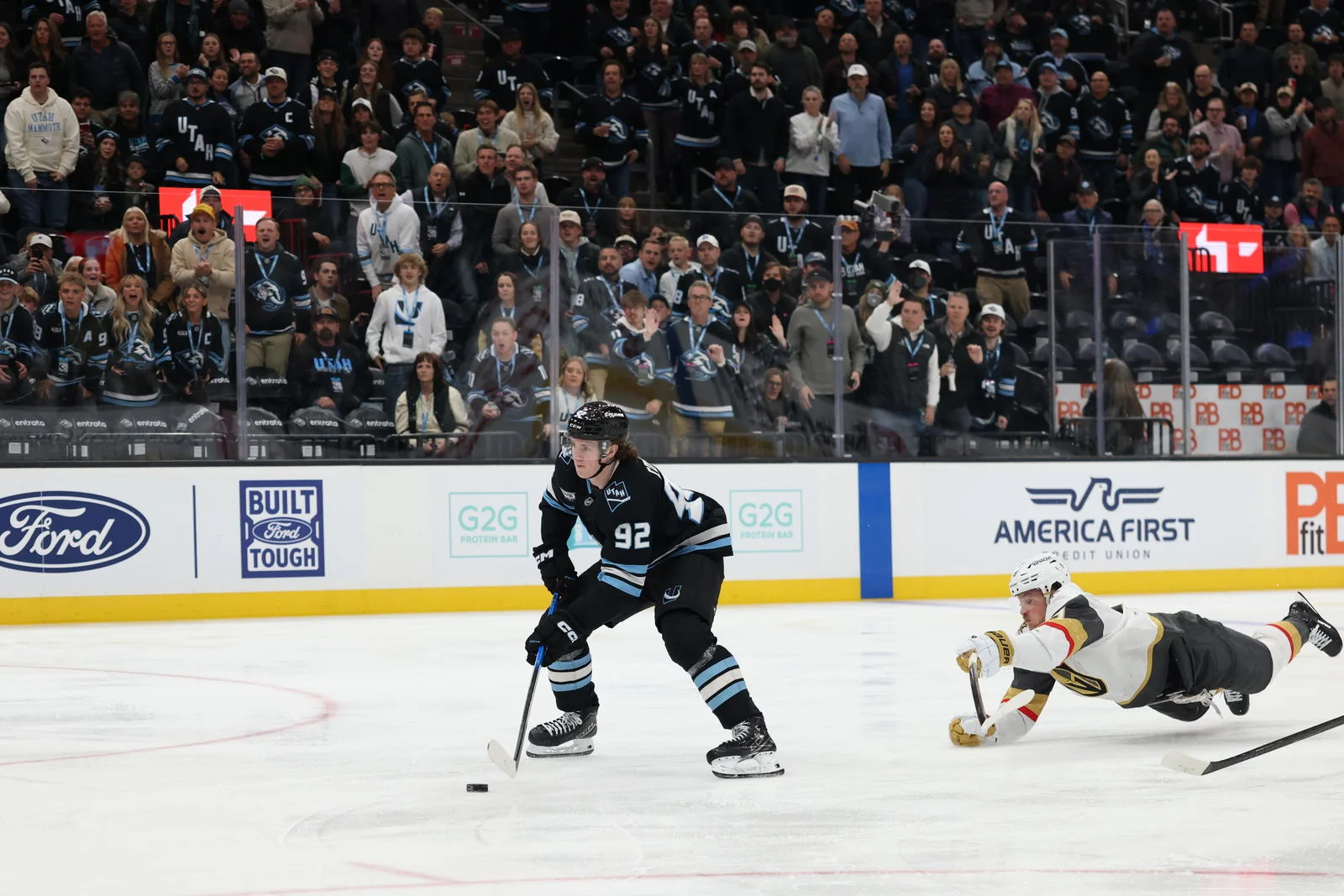 Series Preview: 3 Biggest Challenges Golden Knights Face Against Mammoth
As the Vegas Golden Knights prepare to kick off the Stanley Cup Playoffs, a dangerous opponent awaits them: the Utah Mammoth.
Series Preview: 3 Biggest Challenges Golden Knights Face Against Mammoth
As the Vegas Golden Knights prepare to kick off the Stanley Cup Playoffs, a dangerous opponent awaits them: the Utah Mammoth.
The prevailing narrative of the 2026 playoffs is not just who has the best netminder, but which team can navigate their own goaltending instability. Teams like the Tampa Bay Lightning or Boston Bruins can afford to ignore this conversation; they have their hierarchies set in stone. For everyone else, the opening round is effectively an audition for the starting job. Expect to see coaches show zero patience—if the "right" choice allows an early goal, the hook will be faster than in any previous era. In the current NHL, the difference between a championship run and an early exit is becoming less about long-term stability and entirely about who manages the next 60 minutes correctly.

For action-packed issues, access to the entire magazine archive and a free issue, subscribe to The Hockey News at THN.com/free. Get the latest news and trending stories by subscribing to our newsletter here. And share your thoughts by commenting below the article on THN.com or creating your own post in our community forum.