The Architecture of an Icon: Dissecting the Mohamed Salah Phenomenon
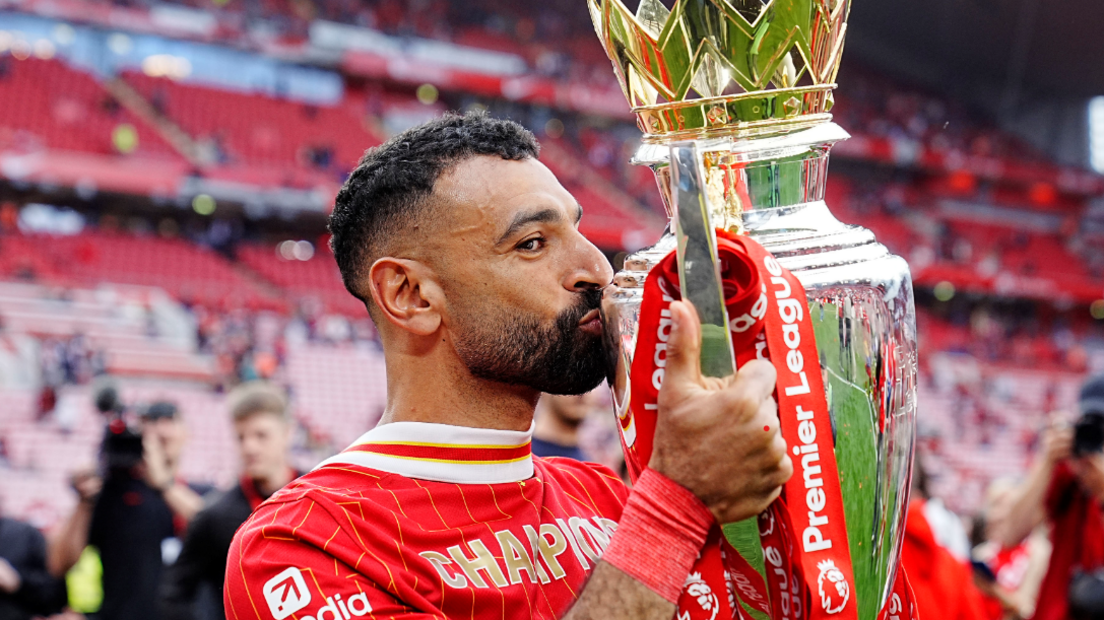
In the delta of the Nile, three hours north of Cairo, sits Nagrig—a village defined by the rhythm of jasmine and watermelon farming, yet now anchored by the improbable trajectory of its most famous export. Mohamed Salah, 33, has spent nearly a decade establishing himself as a global football mainstay. Since arriving at Liverpool in 2017, he has logged 245 goals across 402 appearances, securing a Premier League title and a Champions League trophy. Yet, the story of his ascension remains a blend of gritty reality and national mythos.

For those tracking his career from the beginning, the sheer output of the "Egyptian King" is rarely a surprise. Coaches like Ghamry Abd El-Hamid El-Saadany—who oversaw Salah’s development at the local youth center—recall a player whose physical stature was consistently deceptive. "He was small compared to his team-mates," El-Saadany notes, "but he was doing things even the older boys couldn't manage." Even as a seven-year-old mimicking idols like Ronaldo and Zidane, the determination was apparent. It is a sentiment echoed by Ahmed El Masri, the local barber who cut the teenage forward’s hair: "I’m the one who gave him that curly hairstyle and the beard."
The ubiquity of his image in Nagrig—from murals at his former school to stickers on passing tuk-tuks—speaks to a profound identification between the player and his home country. In Cairo, the "Dentists Cafe" serves as a focal point for fans, where the act of viewing Liverpool matches has become a secular ritual, often charged with personal history. "Salah didn't come from a class of privilege," observes fan Lamisse El-Sadek. "A lot of us see ourselves in him."
This narrative of the "self-made icon" is bolstered by the legend of his commute to Cairo-based club Arab Contractors (Al Mokawloon). Beginning at age 14, his grueling daily routine—balancing academics with hours of travel—serves as the foundational myth of his professional discipline. As the football world prepares for upcoming benchmarks, including the Africa Cup of Nations and the 2026 World Cup, the focus shifts to whether Salah can translate his unparalleled club success to the international stage for a nation of 115 million that views him as its singular sporting representative.
Key Insights
- Mo Salah: Egyptian king (Listen to the full BBC report)
- I can play until I'm 40 - Salah (Published 27 May 2025)
- Salah's extension 'has brought Egyptian people together' (Published 14 April 2025)
- Liverpool's Salah named on Time 100 list

The logistics of a climb
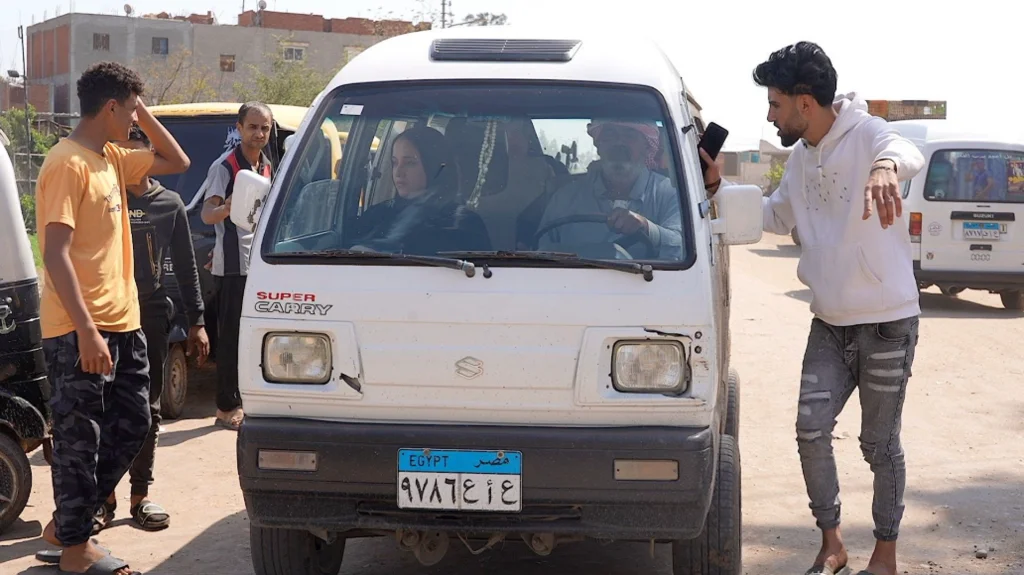
Before the global stardom, Mohamed Salah’s career was defined by the chaotic, irregular pulse of Egypt’s microbus network. Reconstructing his teenage path to the Arab Contractors academy reveals a logistical ordeal that would have broken less committed prospects. The journey from Nagrig was not a direct route; it was a grueling gauntlet requiring transfers through Basyoun, Tanta, and eventually the Ramses terminal in Cairo. Leaving at 10 a.m. and returning near midnight, the daily commute demanded a specific psychological fortitude.
As El-Saadany notes, this was a solitary, expensive, and physically punishing routine. In a city of over 10 million, these microbuses facilitate roughly 80% of daily transit, operating as a relentless 24/7 nervous system for the capital. It is a world removed from the Premier League’s sanitized luxury.
Hany Ramzy, who handed Salah his senior debut in 2011 and managed him during the 2012 London Olympics, views this background as the essential forge for his success. Ramzy, who played 11 years in the Bundesliga and featured for Egypt against England at the 1990 World Cup, recognizes the struggle firsthand. "I had to walk miles just to reach Al Ahly," he recalls, emphasizing that such hardships are foundational to maintaining elite performance standards over time.
'Don't defend!'
Long before Liverpool’s recent tactical setups, Diaa El-Sayed—"Captain Diaa"—was defining Salah’s role. During the 2011 Under-20 World Cup in Colombia, which took place amidst the backdrop of the Egyptian revolution, El-Sayed saw a player of singular focus.
The relationship had its friction. El-Sayed famously chided the young forward after he tracked back against Argentina and conceded a penalty. His instruction was blunt: "Don't defend, why are you in our box? You can't defend!" While modern discourse often credits current managers for Salah's offensive freedom, the tactical directive to isolate him from defensive duties originated with El-Sayed years earlier.
Egypt's 'greatest ambassador'
After 14 years on the national stage, Salah occupies a position of unique influence. He is more than an athlete; his status is such that his physical wellbeing becomes a matter of concern for the highest levels of the Egyptian government. As seen in his efforts in breaking down barriers regarding Islam, his footprint extends well beyond the pitch.
The crushing weight of national expectation on Mohamed Salah is perhaps best illustrated by the medical panic surrounding his serious shoulder injury during the 2018 Champions League final. For national team medic Dr. Mohamed Aboud, the crisis wasn't merely clinical—it was political. Aboud recalls fielding desperate calls from Egypt’s Minister of Health, while internal figures whispered that he had suddenly become one of the most critical individuals on the planet. For a player who was essentially the engine of Liverpool’s output, the recovery trajectory became a matter of state concern.
That pressure was a crucible. While Salah managed to suit up for two matches at the 2018 World Cup, the team’s early exit served as a sobering reminder of the limits of individual brilliance. Yet, to measure Salah’s impact by international trophies is to miss the structural shift he has engineered. As former assistant coach Mahmoud Fayez notes, Salah was the fulcrum for every goal during the 2018 qualifying run, most notably that high-stakes 95th-minute penalty that ended a 28-year drought. That moment—played out in the absolute, haunting silence of 75,000 fans—crystallized his transition from athlete to cultural touchstone.
At 'The Maker' academy, former Tottenham striker Mido now attempts to systematize the Salah blueprint. The curriculum is explicit: discipline, dedication, and motivation. Mido argues that Salah’s true value isn't just his technical output, but the psychological threshold he crossed, forcing European scouting networks to reevaluate their assumptions about Egyptian talent.
In Nagrig, that legacy is less about global scouting reports and more about tangible, local infrastructure. Through the Mohamed Salah Charity Foundation, the forward has bypassed the typical pitfalls of fame, directing resources into post offices, medical units, and sewage projects. As local resident Rashida puts it, the community views him not as a distant superstar, but as a local kin. Whether funding food boxes or pension supplements, the operation remains grounded in a quiet, logistical approach to philanthropy.
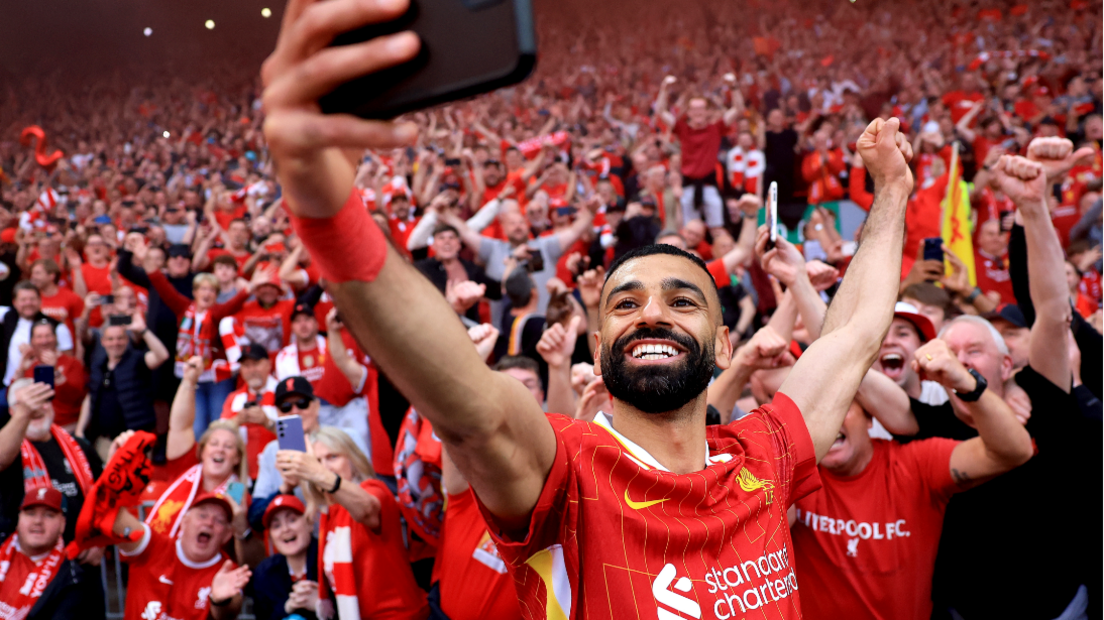
Looking ahead, the narrative of his international "shortfall" persists. Despite his success with Liverpool—including a record-equalling 20th league title—the cabinet remains empty regarding major continental silverware for his country. With the 2025 Africa Cup of Nations on the horizon, the question remains whether the public will demand a final piece of international validation. However, the prevailing sentiment from veterans like Mido is that the bar has already been cleared. Salah’s status as a legend is fixed; at this stage, his career is no longer about proving his worth, but about maintaining the standard he unilaterally established for the next generation.